Slow Drain? Work Through These Fixes Before You Call a Plumber
A step-by-step way to clear a slow sink or tub drain, from pulling hair to cleaning the P-trap, and the signs that point to a main-line problem instead.

In this article
A slow drain rarely fixes itself. Hair, soap scum, grease and food scraps build up a little at a time until water that used to vanish starts pooling around your feet in the shower or sitting in the sink. The good news is that most slow drains are clogged within a foot or two of the drain opening, which puts them within reach of simple tools. The key is to work from the easiest fix to the most involved, and to recognize when the problem isn't in that one drain at all.
Start at the stopper
In bathroom sinks and tubs, the most common culprit is hair wrapped around the stopper or caught just below it. Before reaching for any tool, pull the stopper out and look.
- Pop-up sink stoppers often lift straight out, or come free after you loosen the pivot rod nut on the back of the drainpipe under the sink. Have a towel ready, since a little water will come out.
- Tub stoppers vary. Many unscrew or lift out; others need a screwdriver to remove a cover plate on the overflow.
- Shower drains usually have a strainer held by a screw or two, or one that pries up.
Clean off whatever is wrapped around the stopper, then use a plastic barbed drain-cleaning strip, sold at most hardware stores, to fish out hair from the first few inches of pipe. This alone fixes a surprising number of slow bathroom drains.
A careful word about hot water
Hot water can help loosen soap scum and grease, and running hot tap water for a few minutes after clearing a clog is a reasonable step. Boiling water is a different matter. Pouring it into a porcelain sink or toilet bowl can crack the fixture from the sudden temperature change, and repeated doses of boiling water can soften PVC pipe or loosen its joints. If you use hot water at all, hot tap water is the safer choice. Boiling water is not worth the risk on most modern plumbing.
Use the right plunger
Plungers aren't all the same, and the wrong one won't seal.
- Cup plungers have a flat rubber cup and are made for flat surfaces: sinks, tubs and showers.
- Flange plungers have an extra sleeve of rubber that folds out of the cup. That flange fits into a toilet's drain opening for a proper seal.
Keep them separate, for hygiene as much as anything. To plunge a sink or tub, run enough water to cover the cup, then seal off any other openings: the overflow hole (a wet rag works), the other side of a double kitchen sink, and the drain connection if a dishwasher shares it. Without that seal, the pressure just escapes through the other opening. Push down gently first to push the air out, then plunge with firm, steady strokes and pull up sharply at the end.
Clean the P-trap
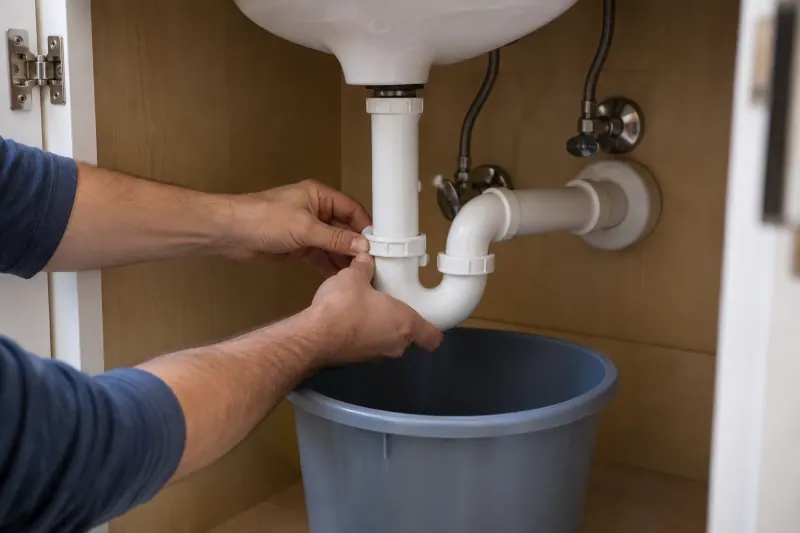
If plunging doesn't help, the clog may be in the P-trap, the U-shaped section of pipe under the sink. It's shaped to hold a little water that blocks sewer gas, and for the same reason it collects whatever goes down the drain.
- Put a bucket under the trap and lay down a towel. Wear gloves; what comes out will not be pleasant.
- Loosen the two slip nuts that hold the trap in place. Plastic traps usually come off by hand; metal ones may need channel-lock pliers.
- Lower the trap and empty it into the bucket. Clean it out with a bottle brush or a bent coat hanger, and rinse it in a different sink.
- Check the washers inside the slip nuts. If they're cracked or flattened, replace them.
- Reassemble, tighten the nuts snugly by hand plus a little more, and run water while you check for drips.
Use a hand auger
If the trap is clear but the drain is still slow, the clog is further down. A hand auger, also called a drum auger or snake, is a coiled steel cable in a hand-cranked drum. With the trap removed, feed the cable into the pipe that goes into the wall. When you feel resistance, crank the drum to work the tip through or into the clog, then pull the cable back out slowly. It often brings the clog with it.
Don't force the cable when it binds, and don't run an auger through a toilet. Toilets need a closet auger, which has a protective sleeve that keeps the cable from scratching the porcelain. Run water afterward to flush out what's left.
Why to skip chemical drain cleaners
Chemical drain cleaners are tempting because they promise a fix without tools, but they come with real downsides. Many contain caustic or acidic ingredients that can burn skin and eyes. If they don't clear the clog, you're left with a sink full of chemical-laced water, which makes plunging or opening the trap hazardous. Some can damage older pipes or fixtures if used often. Never mix different drain products, which can react with each other, and always tell a plumber if you've already poured something down the drain. Mechanical methods are slower to read about and faster to work.
Signs it's a main-line problem
Everything above assumes the clog is in one fixture's drain. Sometimes the problem is in the main sewer line that carries everything out of the house, and no amount of work at a single sink will fix it. Watch for these signs:
- Several fixtures are slow at once, especially on different floors or in different parts of the house.
- Gurgling from a toilet or drain when another fixture is in use, such as a toilet bubbling when the washing machine drains.
- Backups at the lowest drain. Water coming up in a basement floor drain, a lower-level shower or tub when you flush a toilet or run water upstairs is a classic sign of a main-line blockage.
- Sewage odors or water seeping from a sewer cleanout.
Main-line problems can come from tree roots, a collapsed or shifted section of pipe, a sag that collects debris, or a buildup of grease and wipes. A plumber can run a camera through the line to see the cause before deciding how to clear or repair it.
When to call a pro
Call a plumber if the drain is still slow after you've cleaned the trap and run an auger, if a clog keeps coming back, if you've used a chemical cleaner that didn't work, or if any of the main-line signs above appear. Call too if a trap won't come apart without force or the pipes behind it look corroded. Before a big repair, it's worth knowing where your main water shutoff is. When you're ready to book someone, our guide to hiring a plumber covers pricing, licensing and the questions to ask.