Choosing a Gate Installer: The Questions to Ask Before You Sign
A driveway gate combines construction, electrical work and safety equipment. These questions help you find an installer who handles all three, and spot the ones who don't.
In this article
A driveway gate looks like a simple project until you list what it involves: posts set in the ground, a heavy moving structure, often an electric operator, wiring run from the house, and safety devices that have to work every time. A good installer handles all of that as one job. A poor one can leave you with a gate that sags, an operator nobody will service, or a system missing the protection that keeps people from being hurt. We put this guide together so you know what to ask, what to get in writing and which answers should make you keep looking.
Start with your own plan
Installers give better quotes when you can describe what you want. Before you call anyone, know roughly:
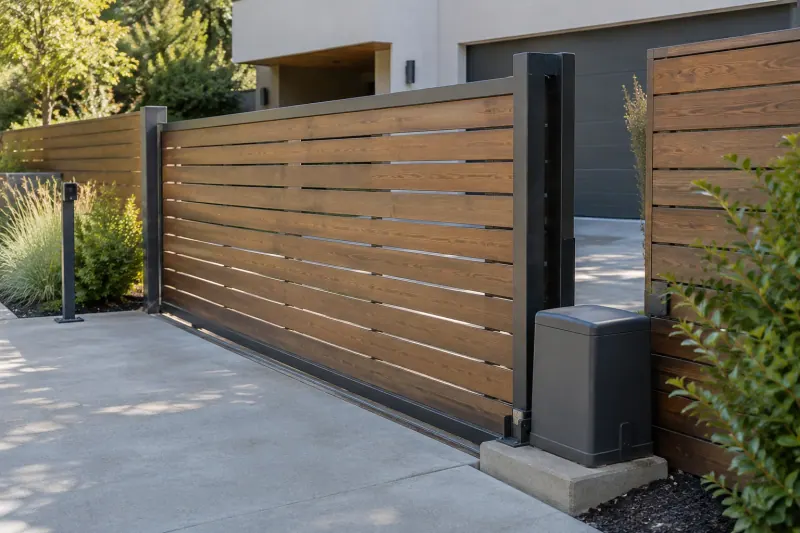
- The width of the opening and whether you want a swing or sliding gate. Our comparison of swing and sliding gates can help you decide based on slope, space and weather.
- Whether you want it automated now, or want it built so an operator can be added later.
- How you'll open it: remotes, a keypad, a phone app, an intercom or some combination.
- Where power would come from, and how far that is from the gate.
- Any HOA rules, easements or property-line questions that could affect placement.
Then ask at least two or three installers to visit the site. A gate is hard to quote accurately from photos.
Licensing, insurance and permits
Licensing
Licensing rules for gate and fence work vary by state and sometimes by city or county. Some places require a contractor license for this kind of work above a certain project size, and electrical work often requires a licensed electrician. Ask the installer what licenses they hold, what the work requires where you live, and who will do the electrical portion. Then confirm any license number with the issuing agency, which in many states you can do online.
Insurance
Ask for proof of liability insurance and, if they have employees, workers' compensation coverage. Ask for a certificate sent directly from the insurer or agent, rather than a photo of a card. Without coverage, an injury or property damage during the job could become your problem.
Permits
Depending on where you live, a gate project may need a permit for the gate or fence itself, for the electrical work, or both. Height limits, setbacks from the street and rules about gates swinging over public sidewalks are common. Ask who pulls the permits and whether the price includes them. An installer who suggests skipping permits to save time or money is shifting risk onto you. If you're unsure, check with your local building department.
Electrical work and digging
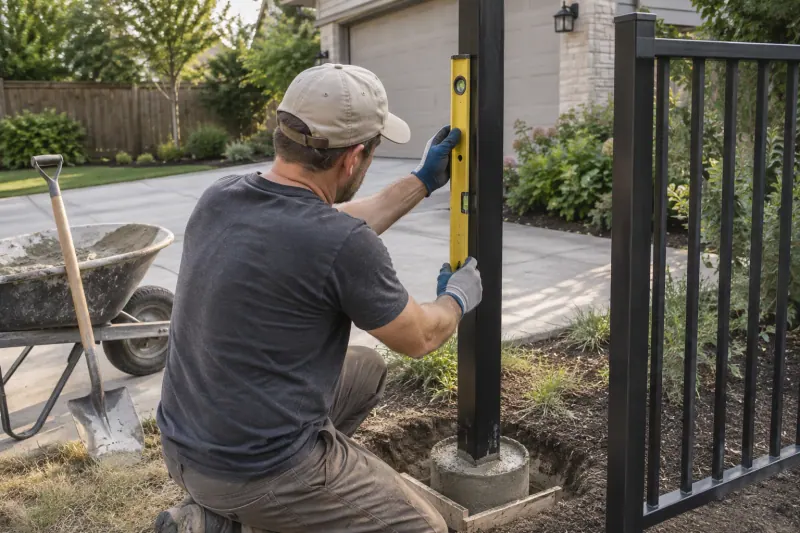
Automated gates need power, and getting it to the gate is often a significant part of the job. Ask:
- Will the operator need a new circuit, and who will install it?
- Will power run underground? How deep, in what conduit, and who restores the lawn or paving afterward?
- Will they call 811 to have underground utilities marked before digging? This free service is available across the United States, and a professional should use it routinely.
- Is a battery backup included, so the gate can still operate during a power outage?
Safety standards and entrapment protection
This is the area where installers differ most, and where it matters most. Automatic gates can trap and crush, and current safety standards exist for good reason. Our automatic gate safety explainer explains the risks and the devices that address them. When you talk with an installer, ask:
- Is the operator listed to the UL 325 safety standard for gate operators?
- Will the gate be built or modified to meet ASTM F2200, the standard for automated vehicular gate construction?
- Which entrapment zones does your design have, and which devices, such as photo eyes and edge sensors, will protect each one?
- Are warning signs and a separate pedestrian gate included or recommended?
- Will you show me how to test the safety devices and use the manual release?
A knowledgeable installer should answer these without hesitation and include the safety devices in the written quote, not offer them as an optional extra.
Operator brands, service and warranties
Operator brands they service
Gate operators come from many manufacturers, and not every installer services every brand. Ask which operators they install and which they service, and whether parts are easy to get. If you're adding automation to an existing gate or taking over an older system, ask whether they'll work on the equipment you already have. An operator that only one local company can repair leaves you with few options later.
Warranty terms in writing
Gates and operators often carry separate warranties: a manufacturer warranty on the operator and its parts, and the installer's own warranty on labor and workmanship. Ask for both in writing, including how long each lasts, what's covered, what voids coverage (for example, someone else working on the system), and who you call when something fails.
Maintenance plans
Some installers offer maintenance plans with periodic inspections and safety-device checks. A plan can be worthwhile for a heavily used gate, but ask exactly what each visit includes, how often visits happen and what costs extra. Even with a plan, you should still test the safety devices yourself between visits.
Comparing quotes
A useful quote spells out the gate material and dimensions, the posts and footings, the operator model, every safety device, the electrical work, permits, cleanup, warranties and the payment schedule. When quotes differ, it is often because one leaves something out. Our guide to comparing remodeling bids walks through lining up quotes line by line, and the same approach works for gates.
Red flags
Keep looking if an installer:
- Won't put the quote, scope and warranty in writing.
- Can't or won't provide proof of insurance or the licenses required where you live.
- Suggests skipping permits.
- Treats safety sensors as optional, or offers to disable them.
- Wants to add an operator to an existing gate without assessing whether the gate itself is suitable.
- Asks for a large share of the price in cash up front, or pressures you to sign the same day.
- Can't say who will service the operator after installation.
A good gate installer will welcome these questions. The answers tell you whether they'll build something that works safely for years, and whether they'll still be around when it needs attention.